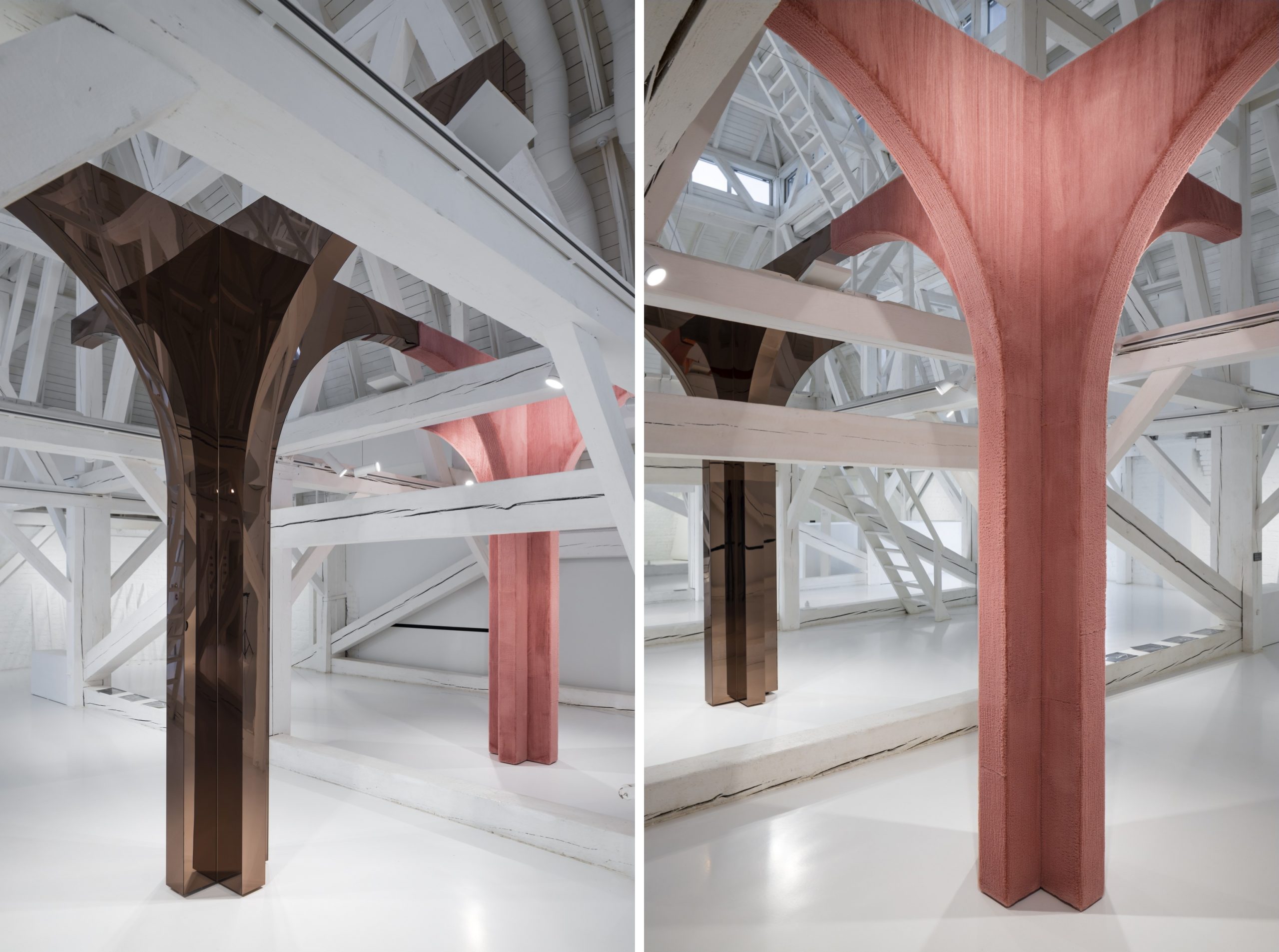
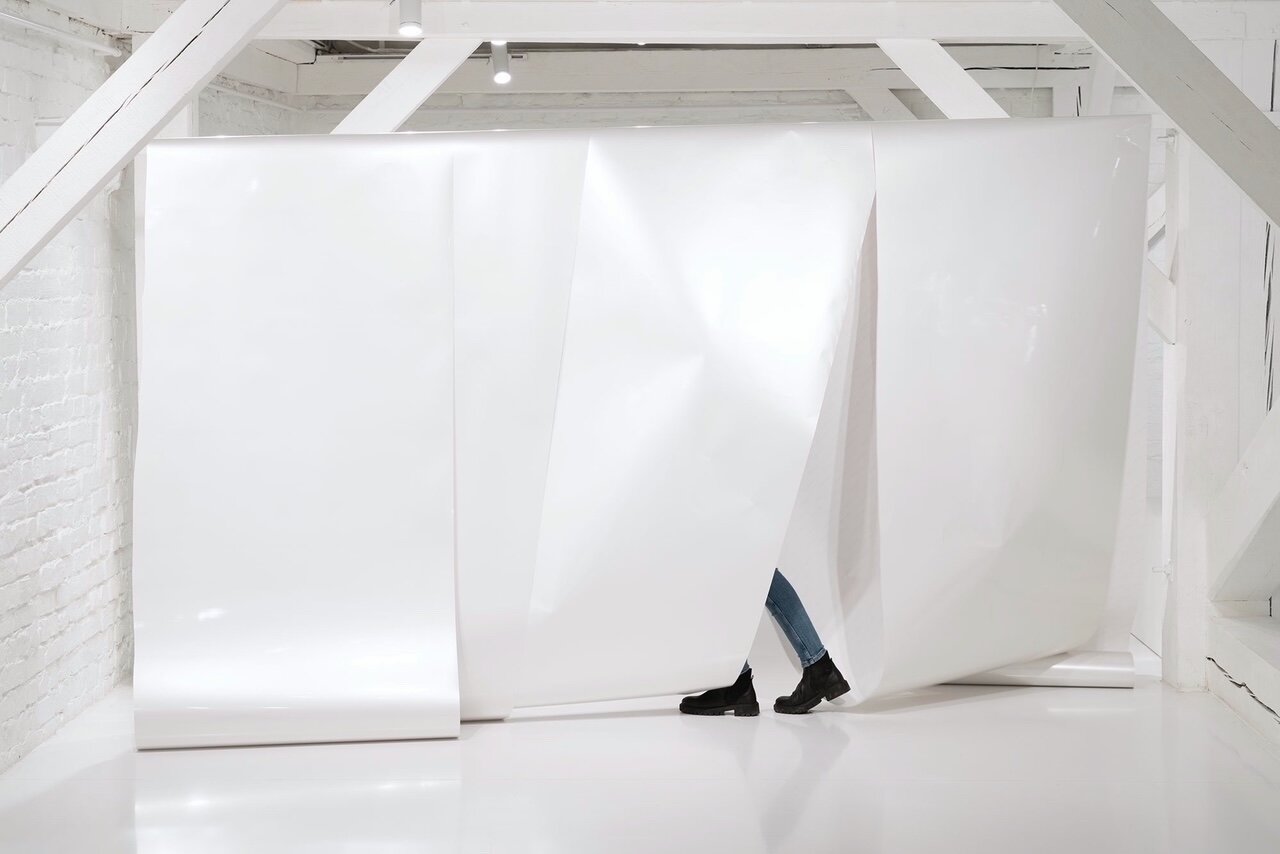
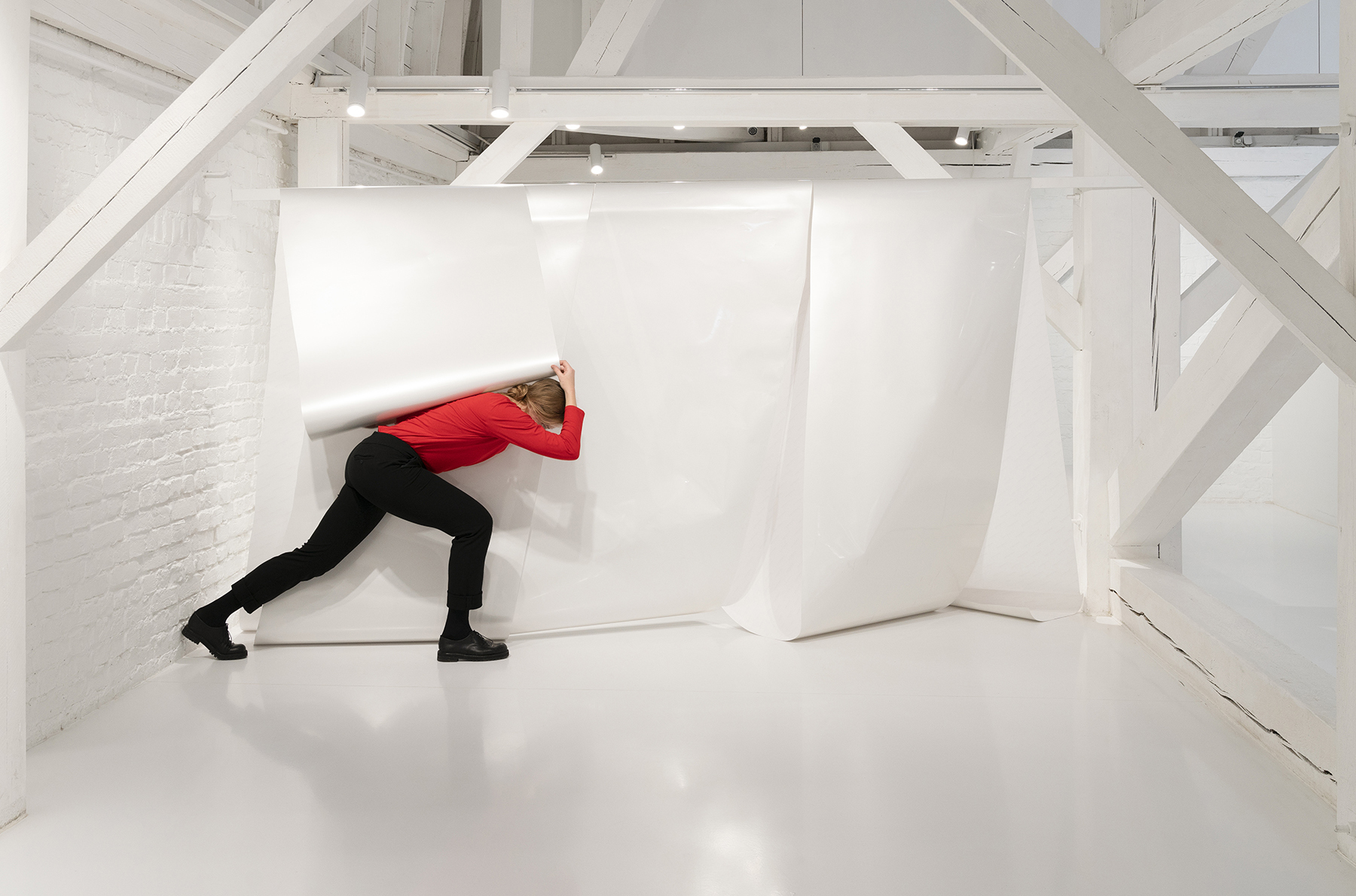
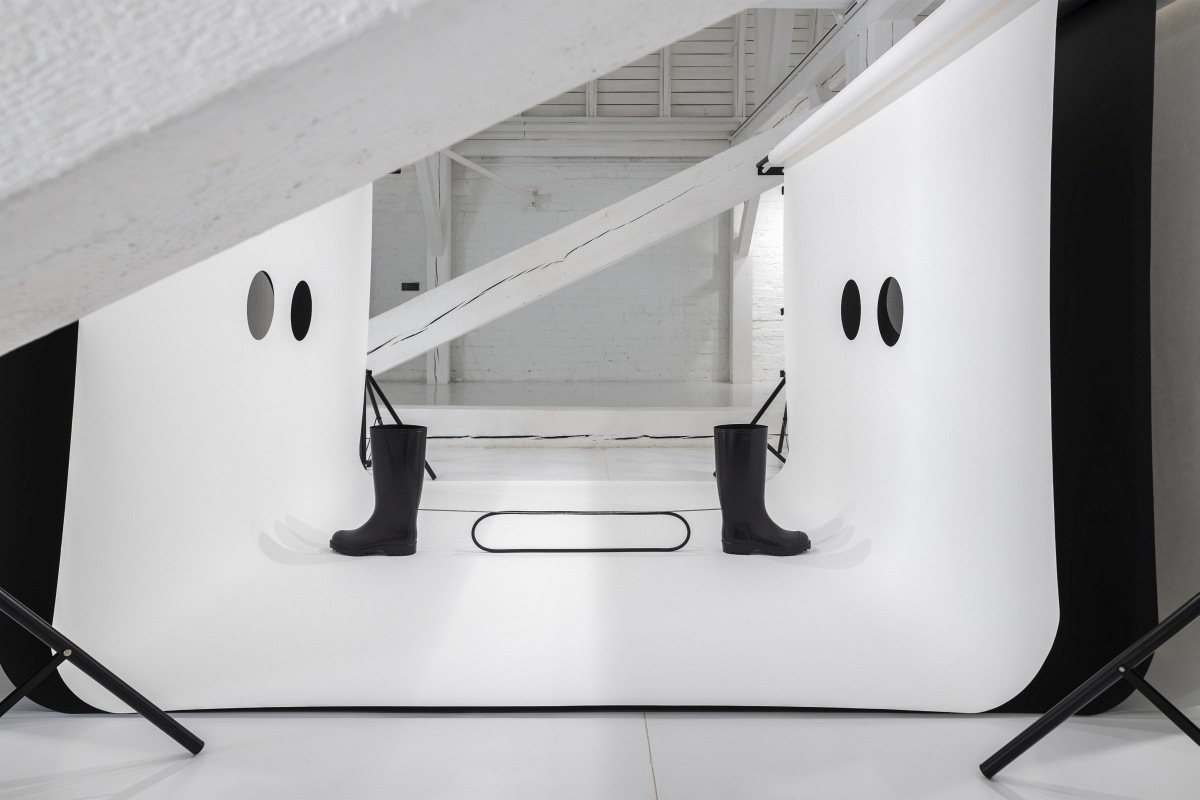
a vocabulary for ghosts
Curated group exhibition
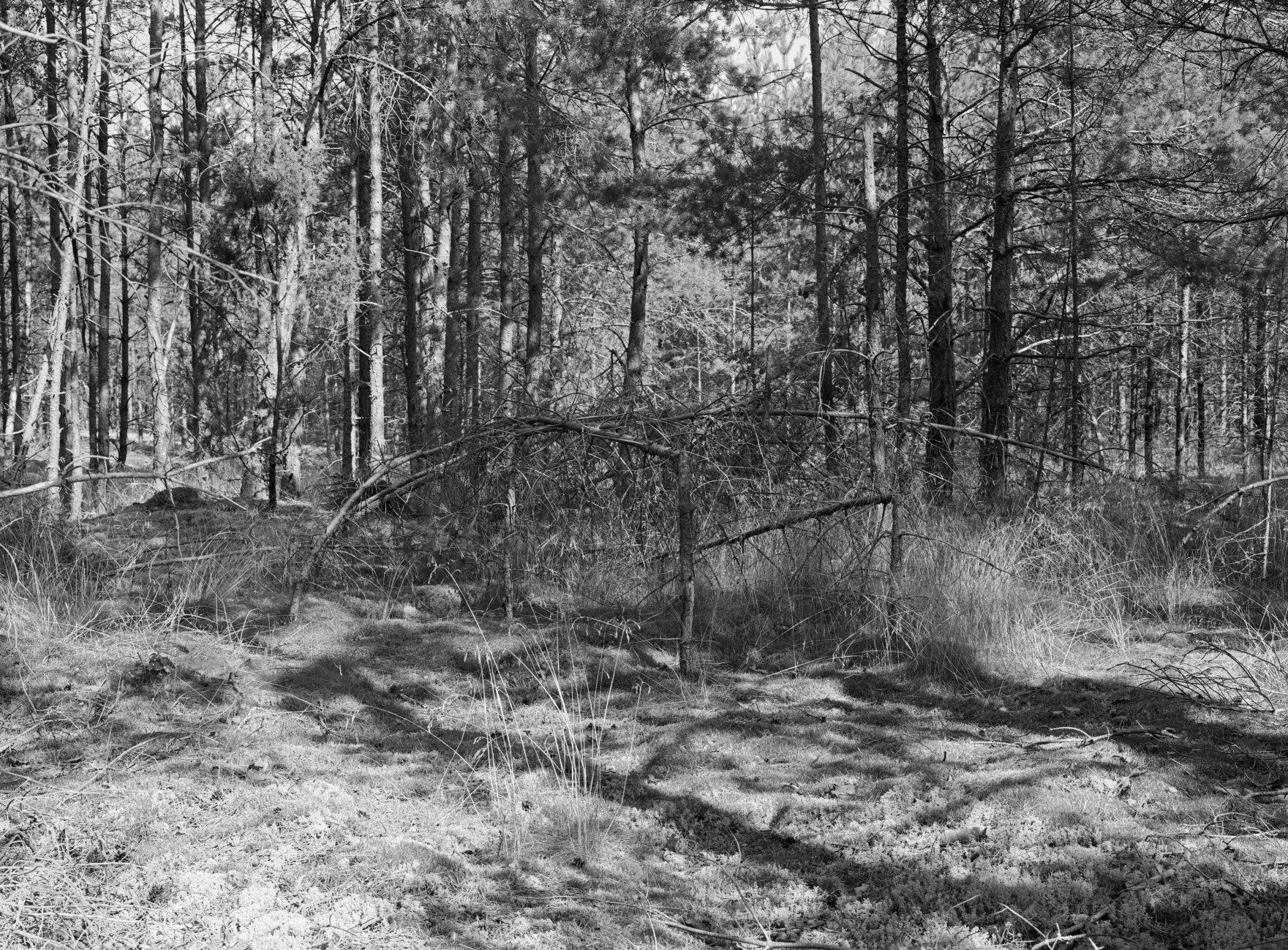
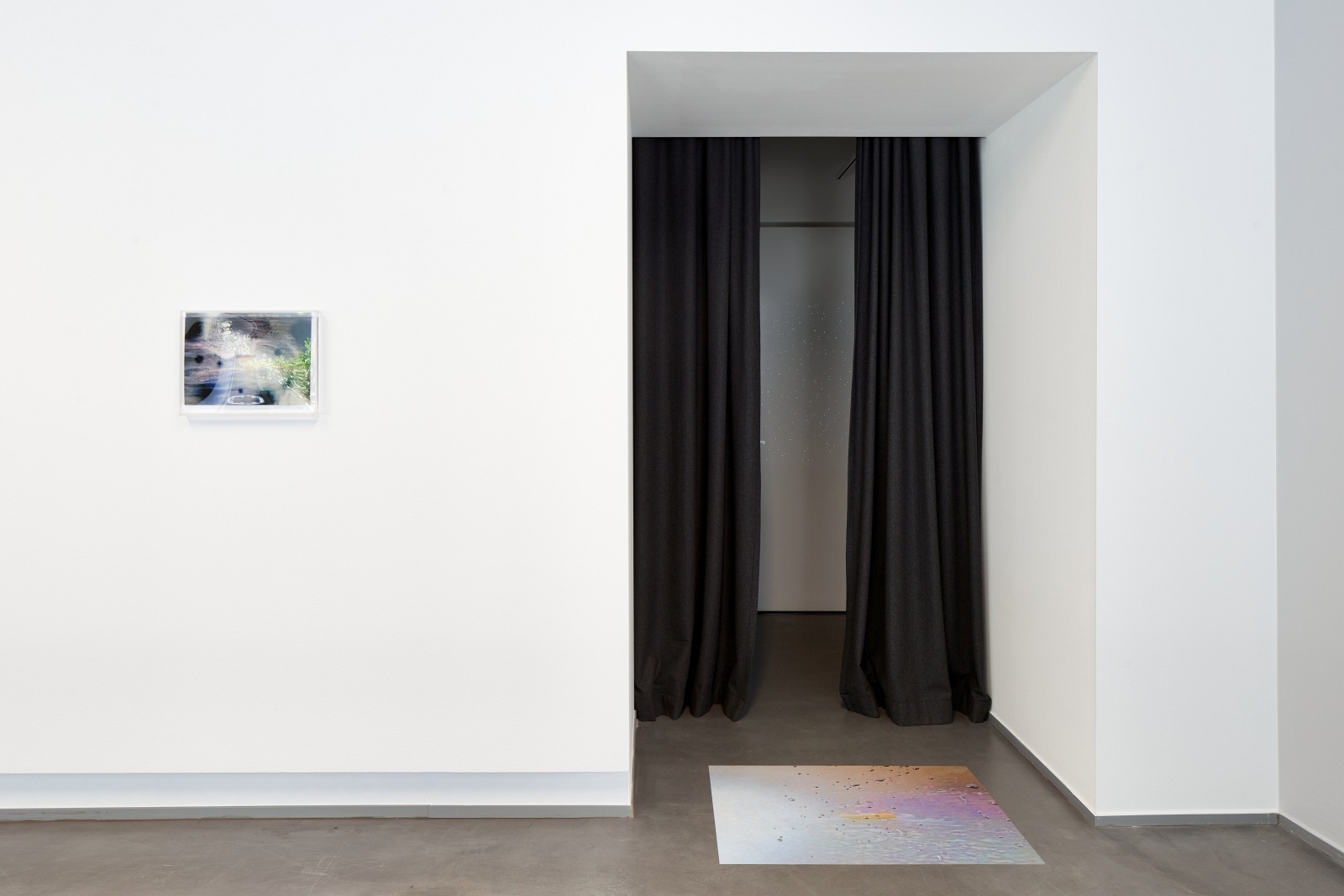
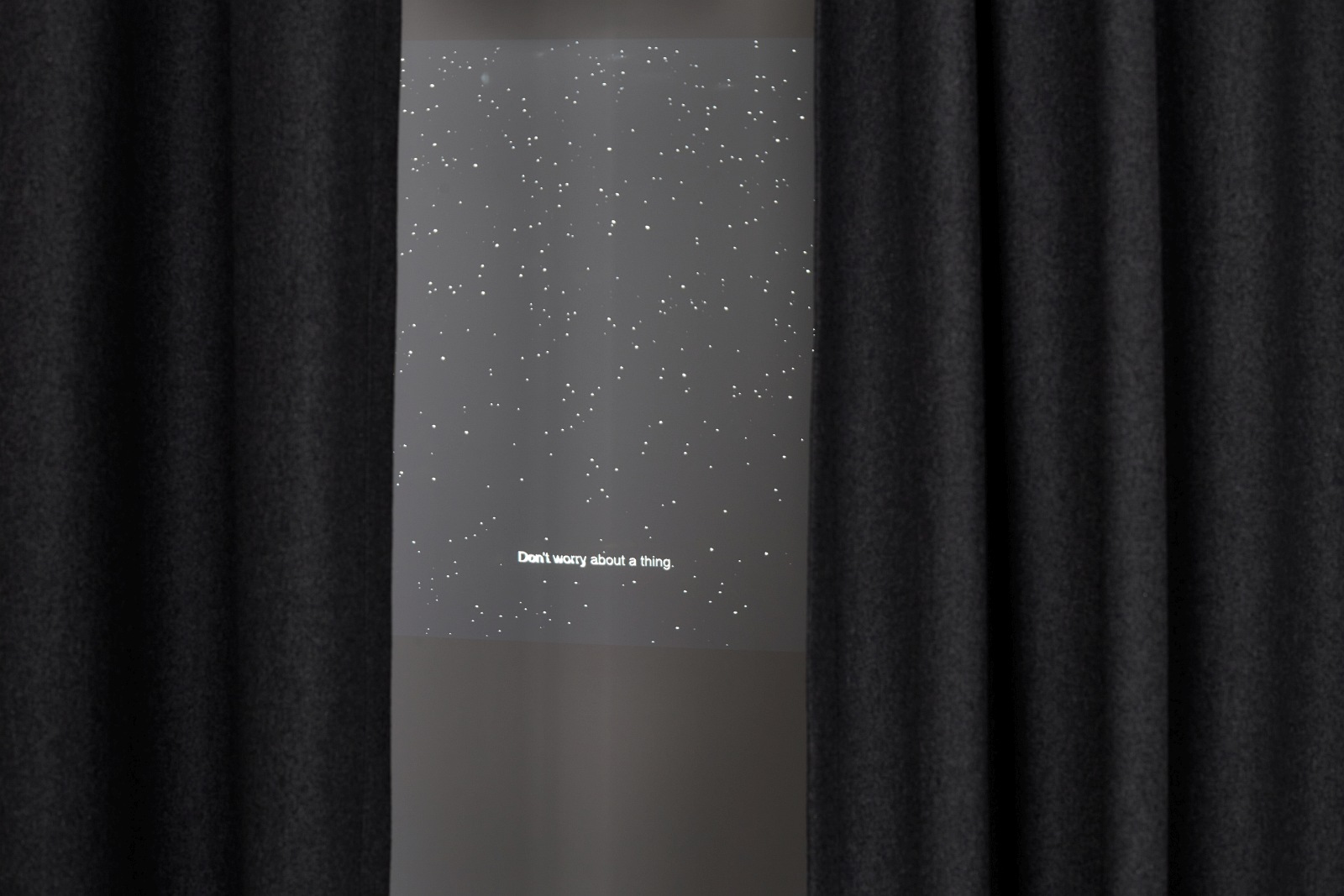
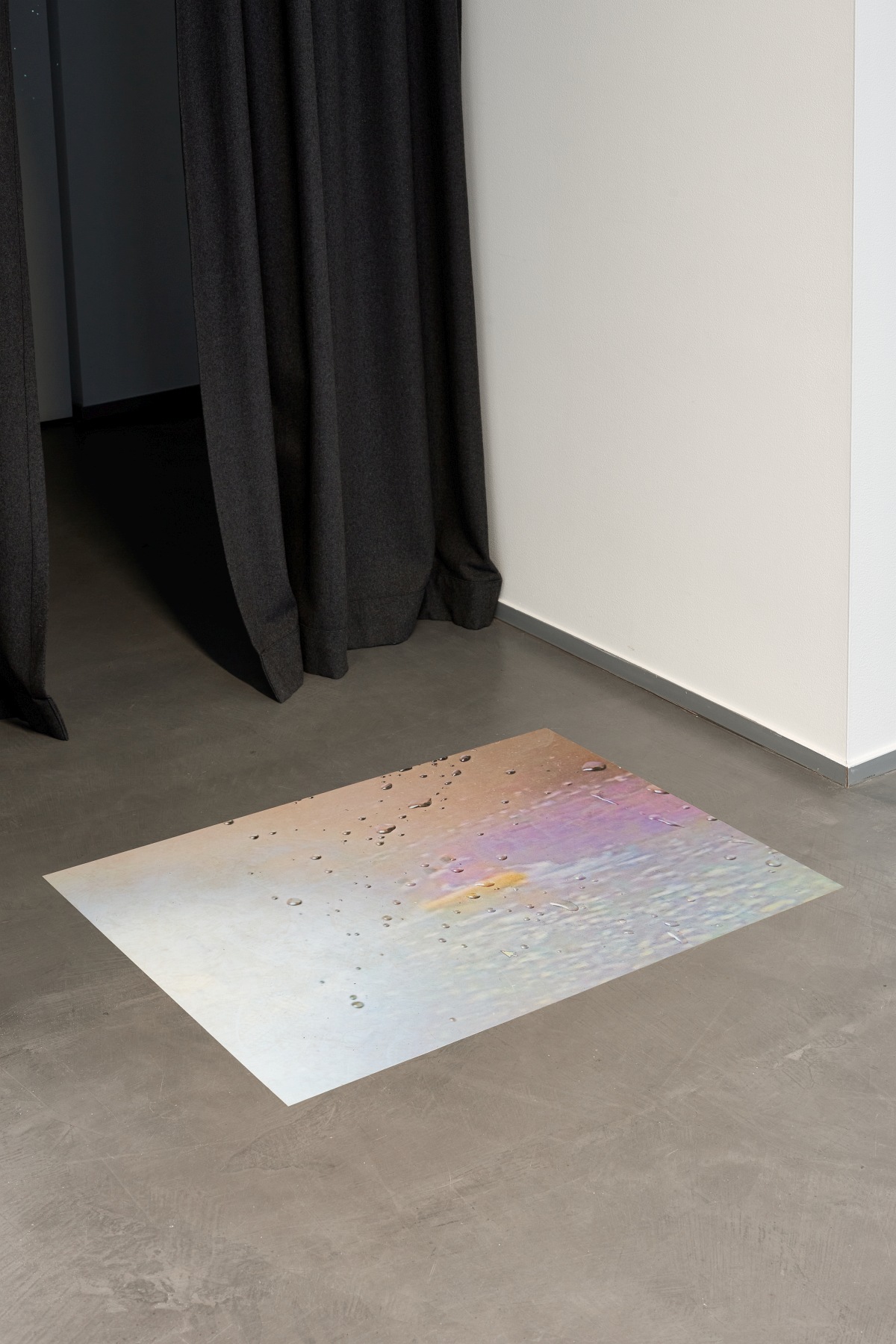
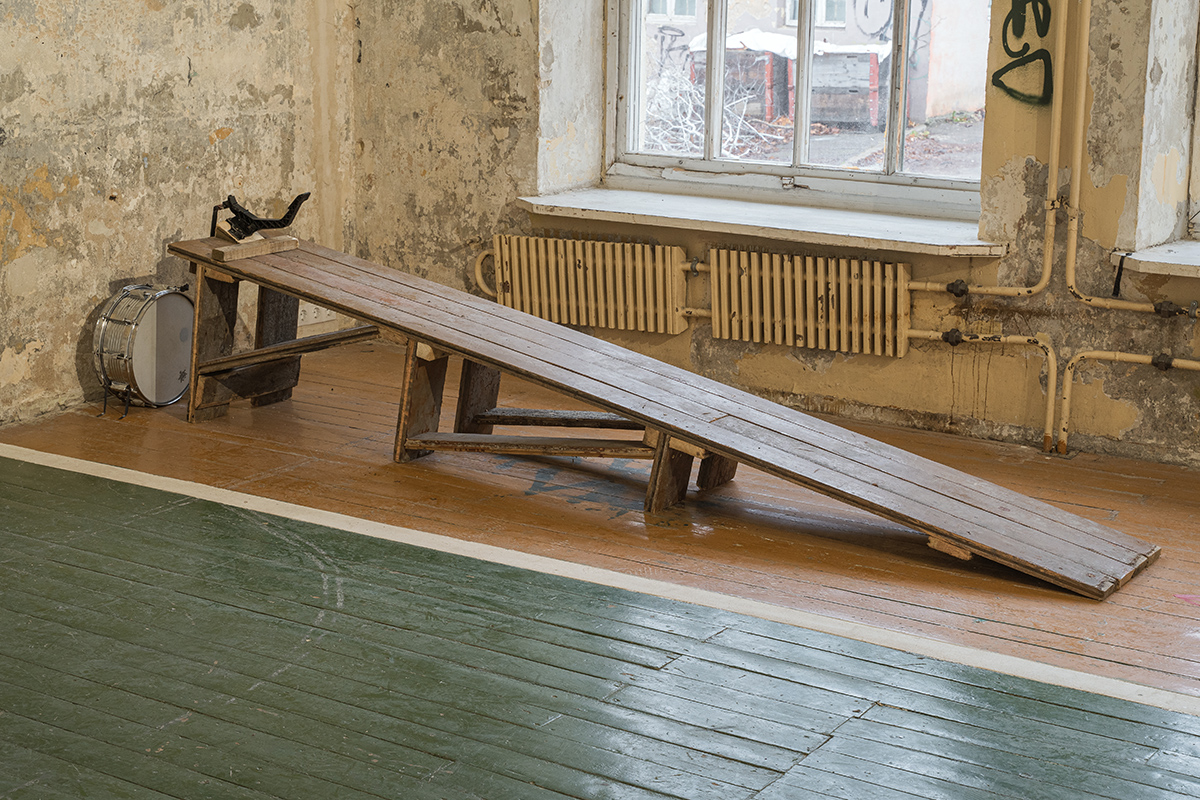
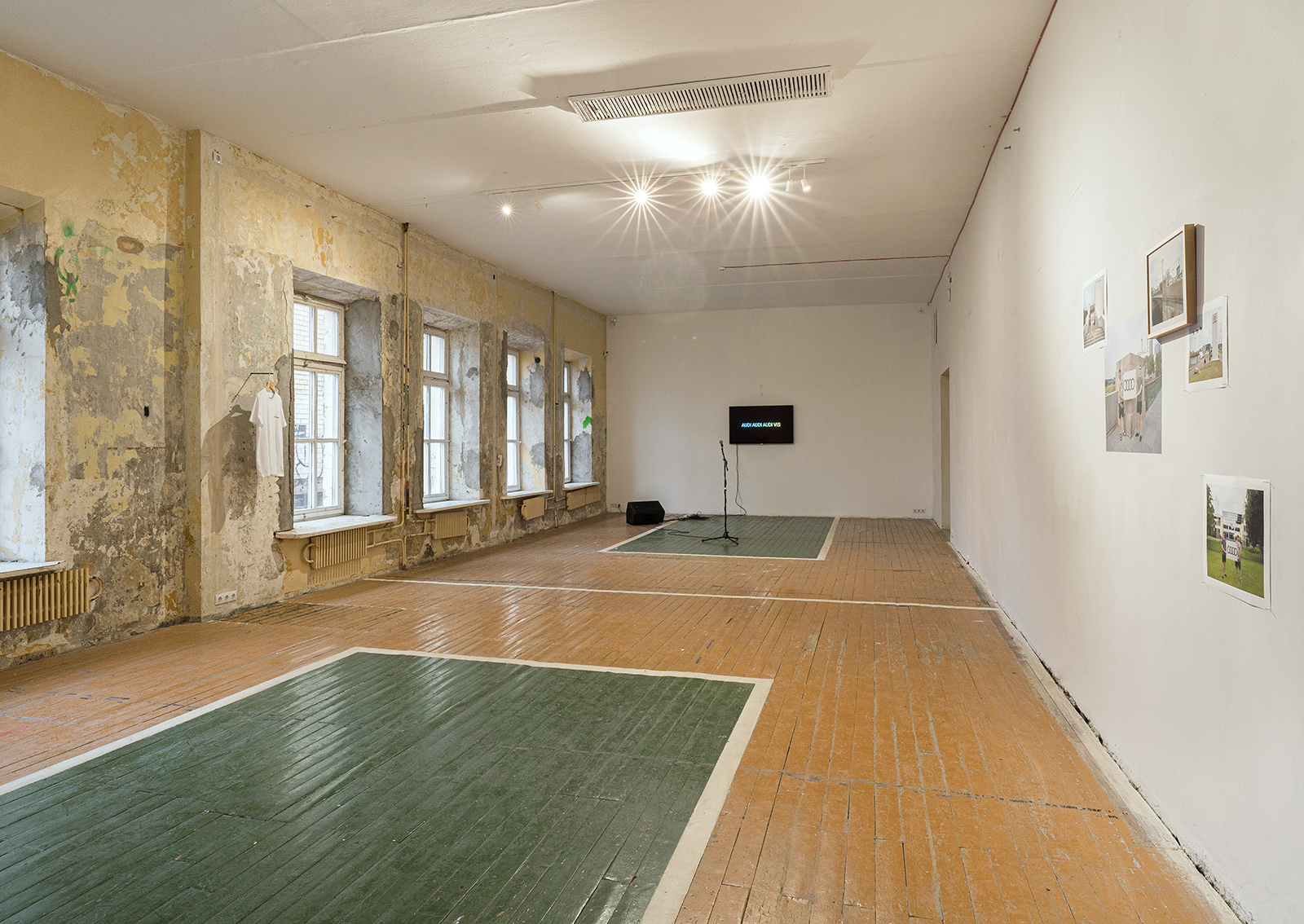
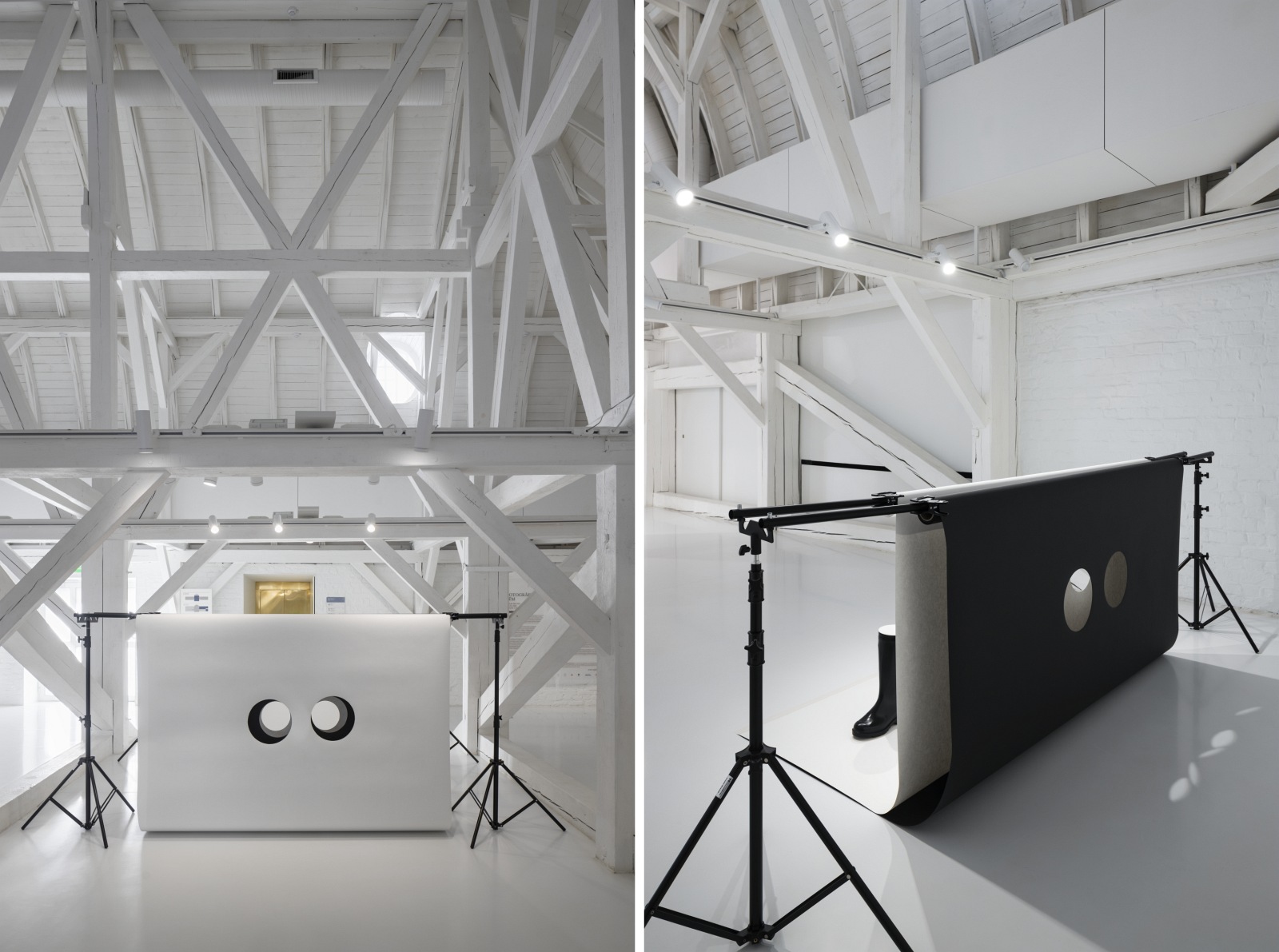
To exist is always to exist alongside others – people, systems, memories and presences that remain partially unseen. a vocabulary for ghosts proposes that co-existence is not only a social or political condition, but also a form of cohabiting with ghosts: invisible forces, archived and unarchived memories, and quiet presences that inhabit the periphery of our attention. The exhibition brings together three artists who develop distinct visual and material vocabularies to articulate – and, in subtle ways, care for – these spectral or marginal states.
Here, “ghosts” are not understood as supernatural entities, but as traces, residues, withheld stories, transitional spaces, and silent infrastructures that shape lived experience. These presences occupy the margins: the blue-hour edges of landscapes, the blind spots of bureaucratic systems, and the ambiguous boundaries of objects and materials. Each artist works with what is fragile or insufficiently legible, constructing a language for what typically resists representation. This pursuit echoes the ghostly mechanics of photography itself: a medium built upon the latent image, where unseen impressions wait in the dark to slowly emerge, revealing a hidden presence, or perhaps remaining permanently obscured.
In this context, tending to ghosts requires a tender and sensitive visual practice – one attuned to fragility, erasure and what might be described as the politics of attention. This installation at ASNI Gallery brings these vocabularies into dialogue through spatial gestures that emphasise thresholds, transitions, and the porousness between material and immaterial.
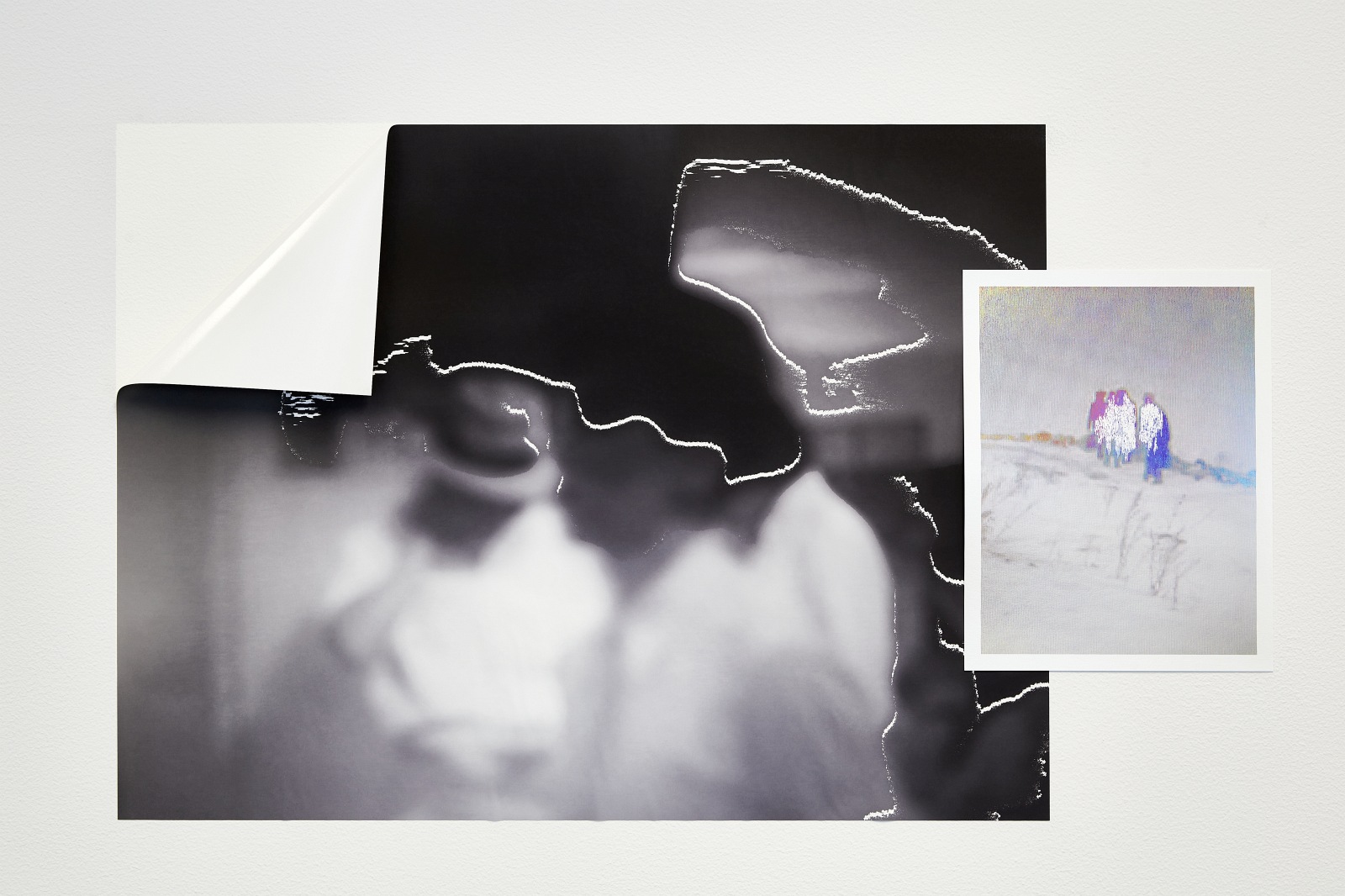
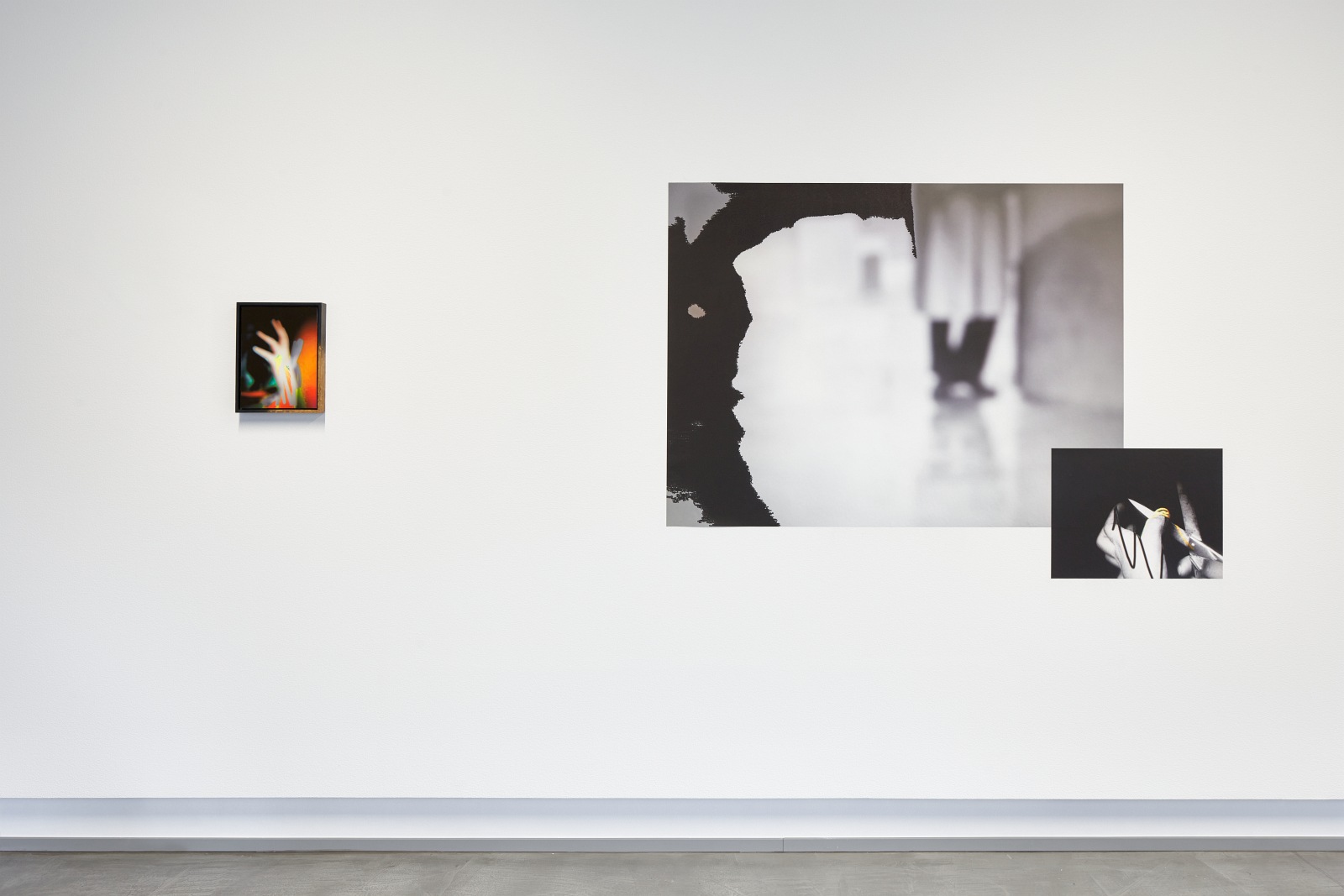
Each of the three artistic practices illuminates a different dimension of the “ghostly” in contemporary life. Saskia Fischer explores ecological and emotional margins, using film to articulate forms of caretaking that unfold outside dominant narratives. Ona Barbora Šlapšinskaitė exposes the residues of bureaucratic systems through redacted call-centre notes and experimental sculptural forms – objects that register both erasure and preservation, functioning as delicate material traces of invisible labour. Tom Lovelace works with photograms and performative interventions to foreground the instability of presence, gesture and attention, activating the exhibition space as a site where images emerge, fade and are re-encountered. Together, their practices propose co-existence as an ongoing negotiation with what remains obscured, fragile or only partially legible.
Artists: Saskia Fischer | Tom Lovelace | Ona Barbora Šlapšinskaitė
Curator: Paulius Petraitis
Exhibition design: Santa Ozoliņa
Opening performance “Willow”: Tom Lovelace in cooperation with Severina Venckutė
Venue: ASNI Gallery
Dates: 2026 04 18 – 05 20
Press:
Review by Geistė Kinčinaitytė (LT) | Artnews
Review by Madara Ēvalde (LV) | FK magazine
Photodocumentation | EGW
Documentation: Dasha Trofimova, Andrejs Strokins
a vocabulary for ghosts was part of Riga Photography Biennial 2026
Form as Function
Curated group exhibition
Form as Function explores the multidimensional concept of “form” in contemporary Estonian photography, moving beyond traditional representation. Featuring works by Paul Kuimet, Kristina Õllek, and Ruudu Ulas, the exhibition treats the medium of photography as a tactile engagement with the world, inviting viewers to critically interact with the image surface where thought and matter converge.
Paul Kuimet, Kristina Õllek, and Ruudu Ulas each approach photography as a material medium, expanding its possibilities through a shared interest in the physical process and material construction of the photograph. For them, form is not merely a visual component but a radical element that shapes meaning. The exhibition surpasses the conventional understanding of “form follows function” found in architectural history, instead treating the photographic image as an active, dynamic force that bridges aesthetic, political, sociohistorical, and psychological dimensions.
This deep engagement with materiality and surface tension is evident throughout the gallery space. Kristina Õllek treats the photographic surface as a sedimentation of geological time. In her research-driven investigations of the Baltic Sea’s fragile ecosystems, she integrates grown sea salt crystals, cyanobacteria, and fluorescent pigments to expand the photograph into sculptural, fossil-like forms that speak to slow ecological violence. Meanwhile, Paul Kuimet blends 16mm film projection and structural assemblages to examine the ideological undersides of modernist history. Tracing reproducible forms from the 1851 Crystal Palace to modern finance capitalism, his works explore how projection technologies and architectural transparency relate to space, capital, and the shifting illusions of immateriality.
Anchoring these historical and ecological inquiries to the domestic sphere, Ruudu Ulas reframes photography as a site of surface tension between bodies, objects, and the spaces we inhabit. Through her site-responsive sculptural installation Material Resistance and the series Difficult Objects, she translates the psychological anxieties of contemporary living into physical experiences. By distorting scale and folding the photographic surface, Ulas invites viewers into intimate, tangible encounters with the unknown. Ultimately, the exhibition reveals how these artists critically and physically engage with a rapidly changing world, proving that sense-making relies as much on touch and material presence as it does on sight.
Curator: Paulius Petraitis
Artists: Paul Kuimet, Kristina Õllek, Ruudu Ulas
November 19 – 30, 2024 | Prospektas Gallery, Vilnius
Supported by: Cultural Endowment of Estonia, Nordic Culture Point, Lithuanian Council for Culture
Documentation: Arturas Valiauga, Paul Kuimet
Press: Echo Gone Wrong | Geistė Marija Kinčinaitytė
A Breaking Point, A Delicate Balancing Act
Group exhibition
In the face of ghostly AI-processed images, photography confronts an existential crisis. Exhibiton A Breaking Point, A Delicate Balancing Act delves into photography’s melancholy amid technological shifts. Featuring non-traditional works by Ieva Rojūtė, Albert Grøndahl, and Benjamin Freedman, it raises critical questions about the medium’s role in our uncertain world.
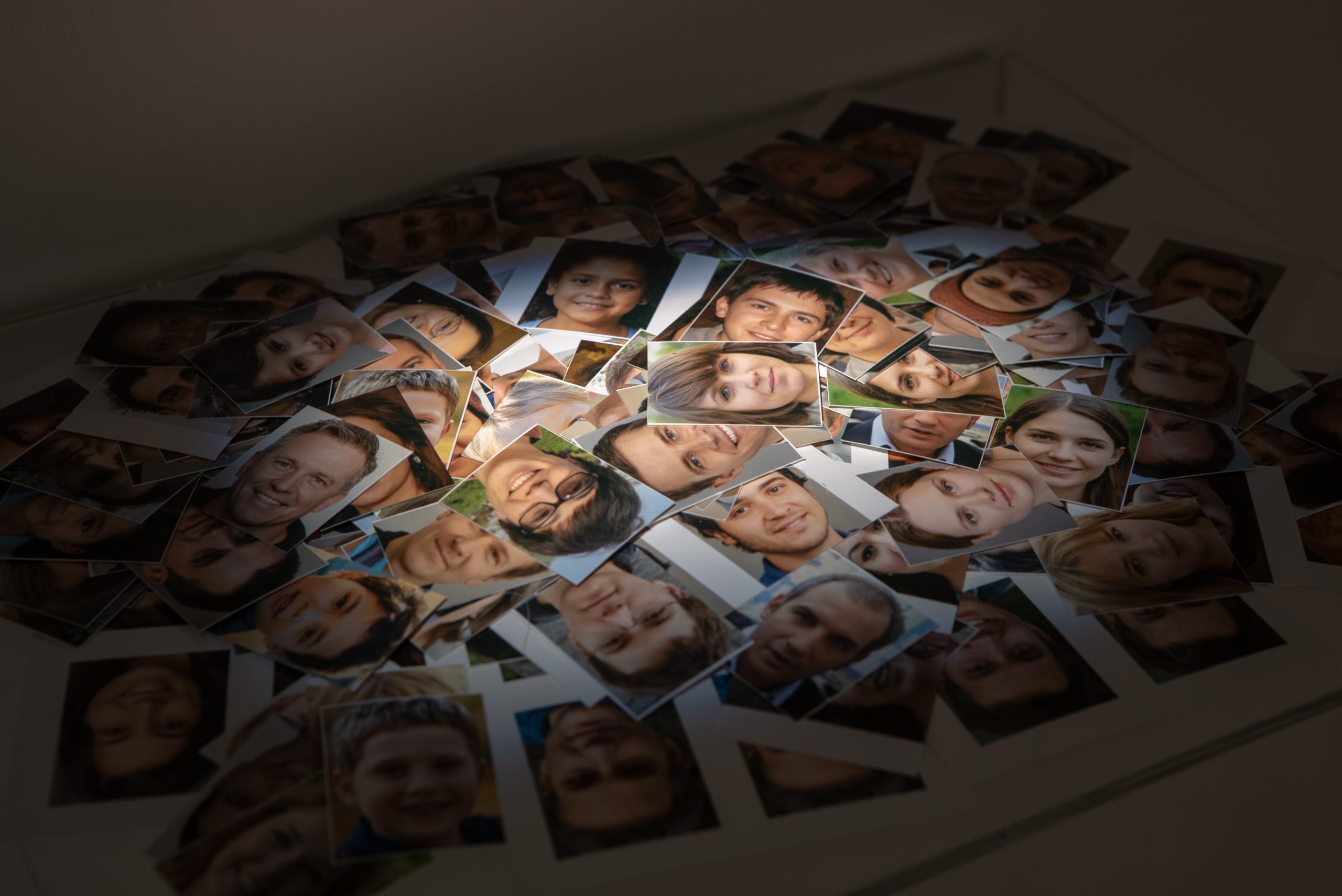
As a future of ghostly AI-processed images is fast approaching, photography seems to find itself in an existential crisis. A medium culturally accustomed to (re)presenting the World in all its detail is now facing competition from a formidable adversary. Unlike traditional photography, which requires real-location-based input and physical presence, text-to-image renderers can generate images from immaterial keywords, seemingly eliminating the need to be there for the photographic “that-has-been” to happen.
This situation raises complex questions regarding visual culture. While many present-day critical inquiries are primarily concerned with exploring what renderers can do, this exhibition takes a different path. Instead of delving into the rapidly changing technological state of AI modeling, it aims to examine photography and explore its present-state melancholy.
A Breaking Point, A Delicate Balancing Act takes a poetic and exploratory stance to navigate the nuanced current state of affairs in photography. On one hand, we witness the extensive use of representational photographic practices, with images employed daily to communicate in unprecedented quantities. On the other hand, there is an underlying anxiety attached to photography, anticipating an uncertain and murky future. This might be a breaking point, as theorist Andrew Dewdney and others have suggested. But a breaking point of what exactly? Is it a breach of trust? Is it a challenge to the ability of photography to depict real-world events, or is it questioning our established relationship and regime with photographic images?
This fragile state of affairs is mirrored by the absence of traditional photographs in the exhibition, yet it remains profoundly photographic. The raised questions and critical vocabulary highlight the proliferation of photographic culture. The exhibition features a site-specific installation by Lithuanian artist Ieva Rojūtė, unique cyanotypes exposed by moonlight by Danish photographer Albert Grøndahl, and software-generated photographic work by Canadian visual artist Benjamin Freedman. These artworks address issues related to the instability of photography through language (Rojūtė), the “memories” of AI-generated images (Freedman), and unstable surfaces (Grøndahl). Together, they present a seductive and aesthetic outer shell, yet deeper critical issues related to the mutability and future uncertainty of the photographic medium loom. How do we continue using photography as a tool when we are uncertain about the world it was invented to depict? The anxiety about photography is, in fact, anxiety about our worldview and our daily positioning of the very selves we create and recreate through imagery.
Curator and text author: Paulius Petraitis
Artists: Benjamin Freedman, Albert Grøndahl, Ieva Rojūtė
Architect: Pauls Rietums
April 20 – June 15 | RIXC Gallery
Part of Riga Photography Biennial 2024
Documentation: Ingus Bajars
Press:
Echo gone wrong | Rūdis Bebrišs
Oasis
Curated exhibition
A garden begins with an enclosure, a line drawn to create a space apart. Within its bounds, the world can be re-ordered. It is a place of refuge and a site of cultivation, where the personal and the communal, the wild and the tamed, the mundane and the mythological can intertwine. In Oasis, her first solo exhibition at Medūza, artist Evy Jokhova transforms the gallery into such a space – a sanctuary for reflection and an archaeology of imagination.
The project finds its roots in the social fabric and DIY creativity of communal gardens in the Baltic region. These are spaces of remarkable resourcefulness and personal myth-making, where private narratives are cultivated on shared ground. Jokhova’s interdisciplinary practice has long investigated the dialogue between social anthropology, vernacular architecture, and art. Here, she turns her attention to the fertile ground where everyday objects sprout into symbols, exploring how enduring folklore stories can be woven from the threads of what was and what could be.
Informing this investigation is the work of Lithuanian archaeologist Marija Gimbutas, whose theories on a peaceful, matrifocal culture find resonance within the exhibition. Jokhova does not seek to illustrate the past, but rather to reactivate its spirit. She applies Gimbutas’ method of “archaeomythology” – reading deep meaning in humble artifacts – to the present day, treating the contemporary garden as a living archaeological site. In this space, ancient symbols of regeneration find their modern counterparts in the mass-produced as well as artist’s handcrafted objects, creating a dialogue between the deep time of prehistory and the vibrant vernacular of a Baltic courtyard.
The gallery is transformed into a landscape populated by these new relics. At the entrance, a quilted textile collage acts as a playful emissary. The piece unites elements from Jokhova’s previous work on Estonian mythology with the current context, creating a narrative in which Estonian gnomes, in a nod to the travelling gnome in the film Amélie, visit the communal gardens of Lithuania. Elsewhere, a large, dinosaur-like egg stands as an artefact of a speculative myth, its form both familiar and fantastical. This symbol of deep time, however, is presented with a sense of irony: it sits atop a kitschy, mass-produced garden frog statue purchased from “Senukai”, Lithuania’s largest chain of DIY and gardening superstores. This gesture is central to the exhibition’s logic, upending the distinction between a profound, handcrafted myth and an everyday garden ornament. It captures the blend of high creativity and consumer kitsch that characterises the resourceful, bricolage aesthetic of the communal gardens. These objects are complemented by a collaboration with woodcarver Linas Žulkus: a photograph of a misty, placeless road is juxtaposed with a frame constructed from Palanga driftwood. This frame, carved with forest animals from Lithuanian folklore, does more than simply contain the image; it actively grounds it, embedding universal journey within the local narrative.
In a time marked by widespread ecological anxiety, the turn to the garden is not a gesture of escapism. Instead, Evy Jokhova’s Oasis presents this act as a potent model for resilience and regeneration. Here, the garden is posited as an act of poetic (resi)stance, a space where mythmaking can be cultivated. This alchemy, fusing ancient cosmology with the vibrant, living practice of the communal garden, suggests that the creation of myth is not a relic of the past, but a necessary activity to be cultivated in the here and now. Functioning as a seed planted in the fertile ground of the gallery, the exhibition is a reminder that in the simple, generative act of tending to a place, we engage in the fragile art of world-making, creating a refuge where new narratives can take root and grow.
Curator and text author: Paulius Petraitis
Artist: Evy Jokhova
Additional exhibition text: Ann Mirjam Vaikla
Photography: Laurynas Skeisgiela
Press:
Review by Justė Kostikovaitė | Echo gone wrong
Photo reportage
Oasis
2025.07.18-08.23
Medūza
Early photographs
Early photographic works
Enjoy the now
Project & solo exhibition
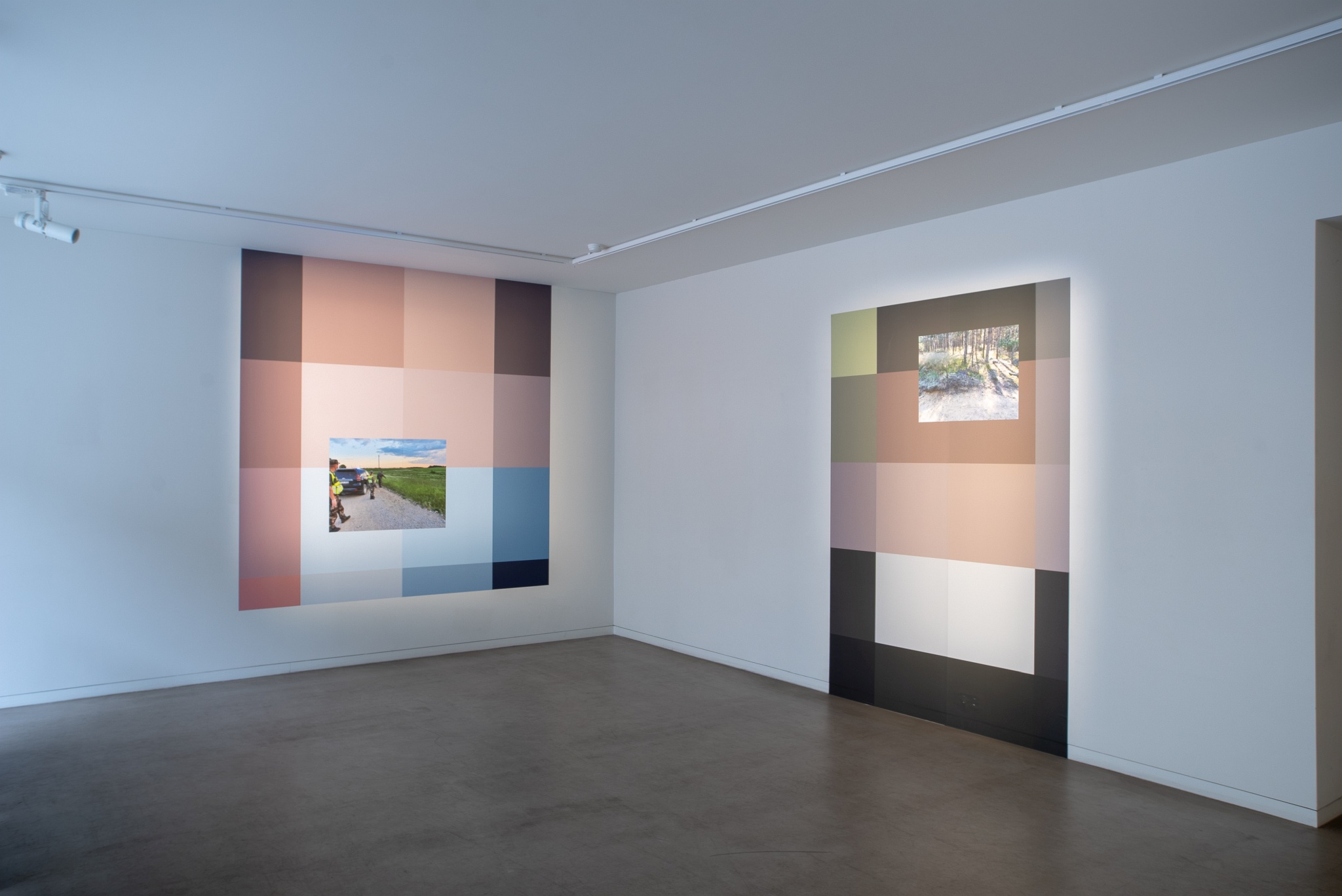
I trudge through a thick forest. I climb over fallen trees, of which there are plenty in this area. No one seems to be clearing the forest here. A glitchy GPS signal slowly leads me towards Belarus. I stop when I reach a clearing. I cannot proceed further and reach the destination – one of several migrant camps situated at the border. I can see the guard towers of the Border Guard, but what catches my eye even more, is the gleaming barrier in the sunlit landscape: from where I stand, the concertina looks almost like a mirage. It glows in the autumnal but still warm midday sun and seems to have an unearthly shimmer. I stand at a distance. My border permit (issued by the Varėna Frontier of the State Border Guard Service; purpose – “mushroom picking”) – which is about to be checked by two young border guards – explicitly forbids taking photographs of “foreigners who have illegally entered the territory of Lithuania during the state of emergency”. So I walk around with a basket for mushrooms, which I hardly find, and take pictures not of people, but of the subtle signs of their presence in the forests: laid-out grass, litter left behind, someone’s socks, broken branches.
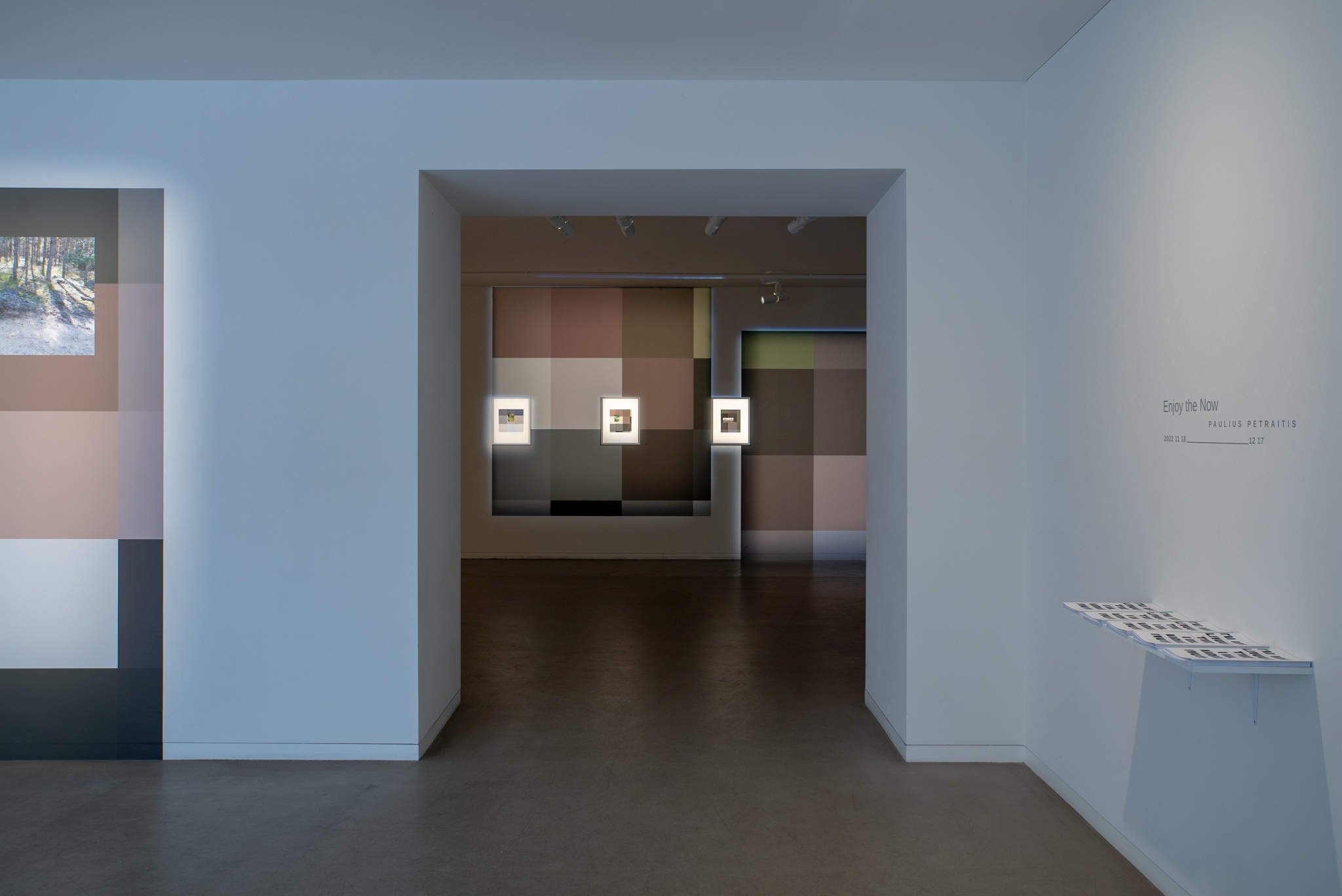
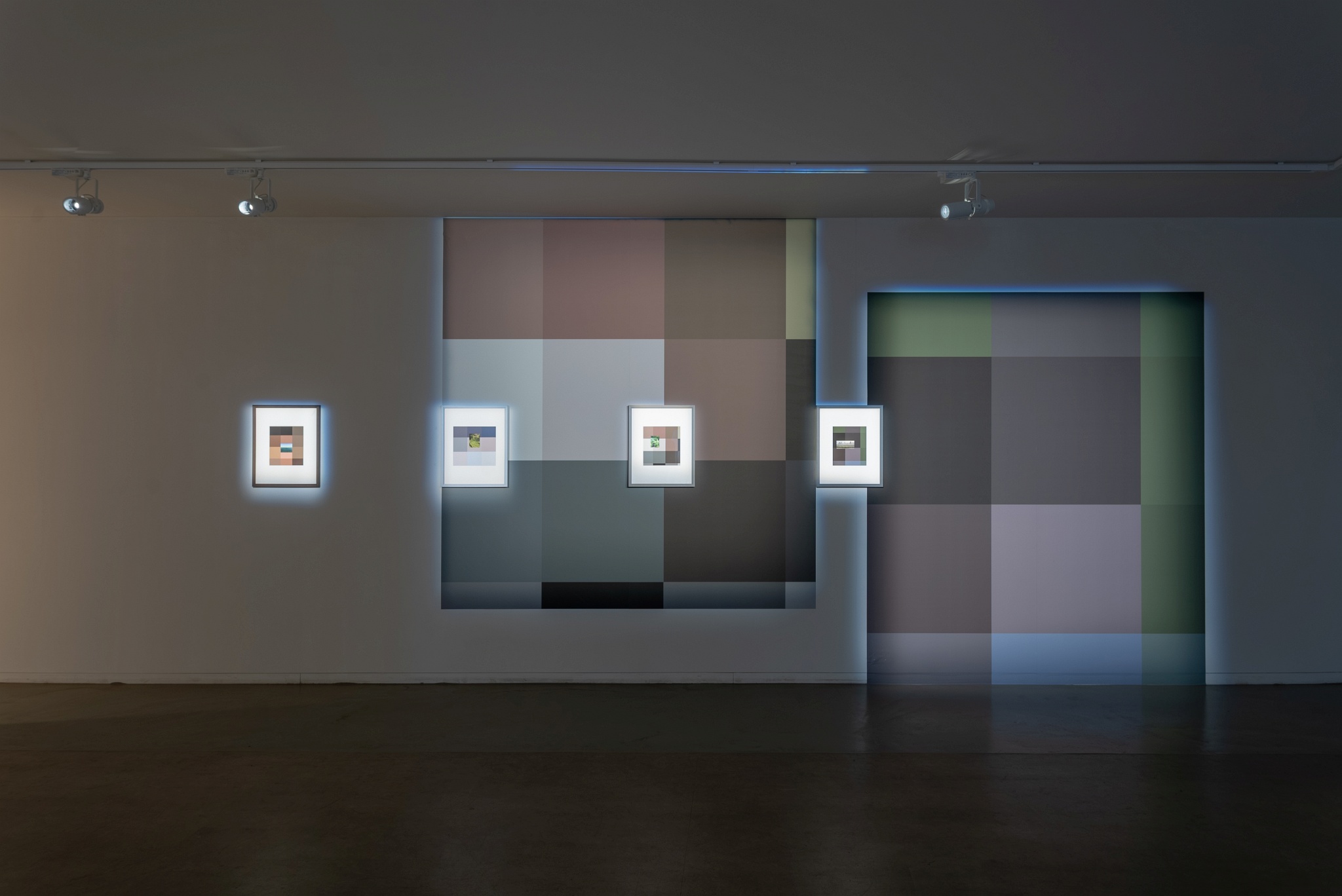
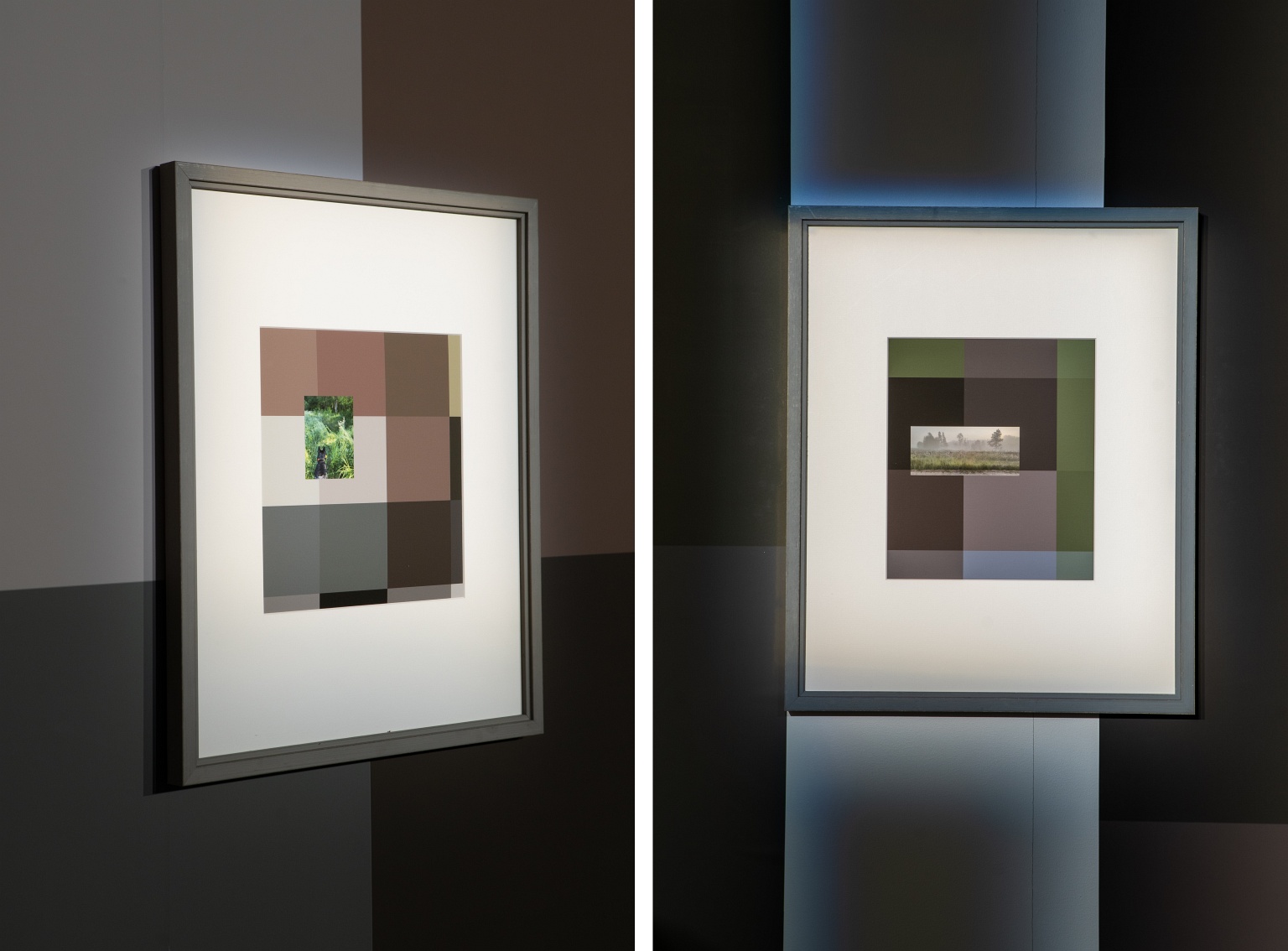
According to a study on subjective security perception conducted in 2017 by the Lithuanian Social Research Centre, “distant regions and social processes taking place there cause serious concern for the Lithuanian population”. This anxiety “is usually based on a vision of threat constructed by the mass media”. This construction was also evident during the summer of 2021, when, in the wake of a migrant crisis, the image of the migrants was shaped by widely publicised photographs by the State Border Guard Service. The impact of these photographs was amplified by the fact that for some time they were the only visual witnesses to the events, and in them, the faces of the migrants were concealed by pixel blocks – a common practice of anonymisation that the SBGS applies to smugglers under arrest. Pixelated faces abstract real people, their experiences and stories. Pixelation in photographs was accompanied by other visual practices of intimidation: lined up migrants, their hands behind their heads, etc. This illustrates the narrative that has been consistently suggested: that migrants – indiscriminately – are equal to criminals who pose a threat.
With portraits of migrants, their stories and experiences pushed out of the public discourse and turned into meaningless statistics (reduced to a changing number in a series of headlines “X more migrants turned away at the border with Belarus”), there is also an attempt to remove from the public eye the actions taken by the border control institutions. The dark side of the pushback practice is also reflected in the position of the Ministry of the Interior – “no one is to see the work of the officers at the border between Lithuania and Belarus”. This is reminiscent of the discourse highlighted by visual culture theorist Nicholas Mirzoeff, which is more characteristic of authoritarian regimes: “Move on, there is nothing to see here”. When the concertina gleams in the sun once again, I think to myself: I want to be here because I am unwanted.
Enjoy the Now was a solo exhibition at Prospektas gallery in Vilnius. The installation featured works from Out of Sight, Out of Mind (2021-) series as well as AI-generated portraits, photographs from former impromptu migrant camps in Lithuanian forest and found objects.
The project was presented internationally at the Circulation(s) Festival in Paris in 2025.
Thanks to: Mantautas Šulskus & Sienos grupė, Pavelas Salaikiškis
Illustration: Joleet Saadon
Exhibition graphic design: Jūratė Gačionytė
Image preparation assistance: Aaro Veiderpass, Karolis Dovidavičius
Documentation: Laurynas Skeisgiela
Press:
(LT) Perspektyva | LRT
(LT) 7md | Marija Martinaitytė
(LT) Delfi | Evelina Joteikaitė
(PT) Público | Ana Marques Maia
Surfaces
Photographic series & exhibition
Photographs are traditionally looked at as if they are transparent. The idea is that one usually doesn’t look at the photographic surface, but rather through it to contemplate the scene an image presents in all its detail. This transparency of the medium serves many purposes, specifically, it enables the photographic image to function as the universal communicative language it is today.
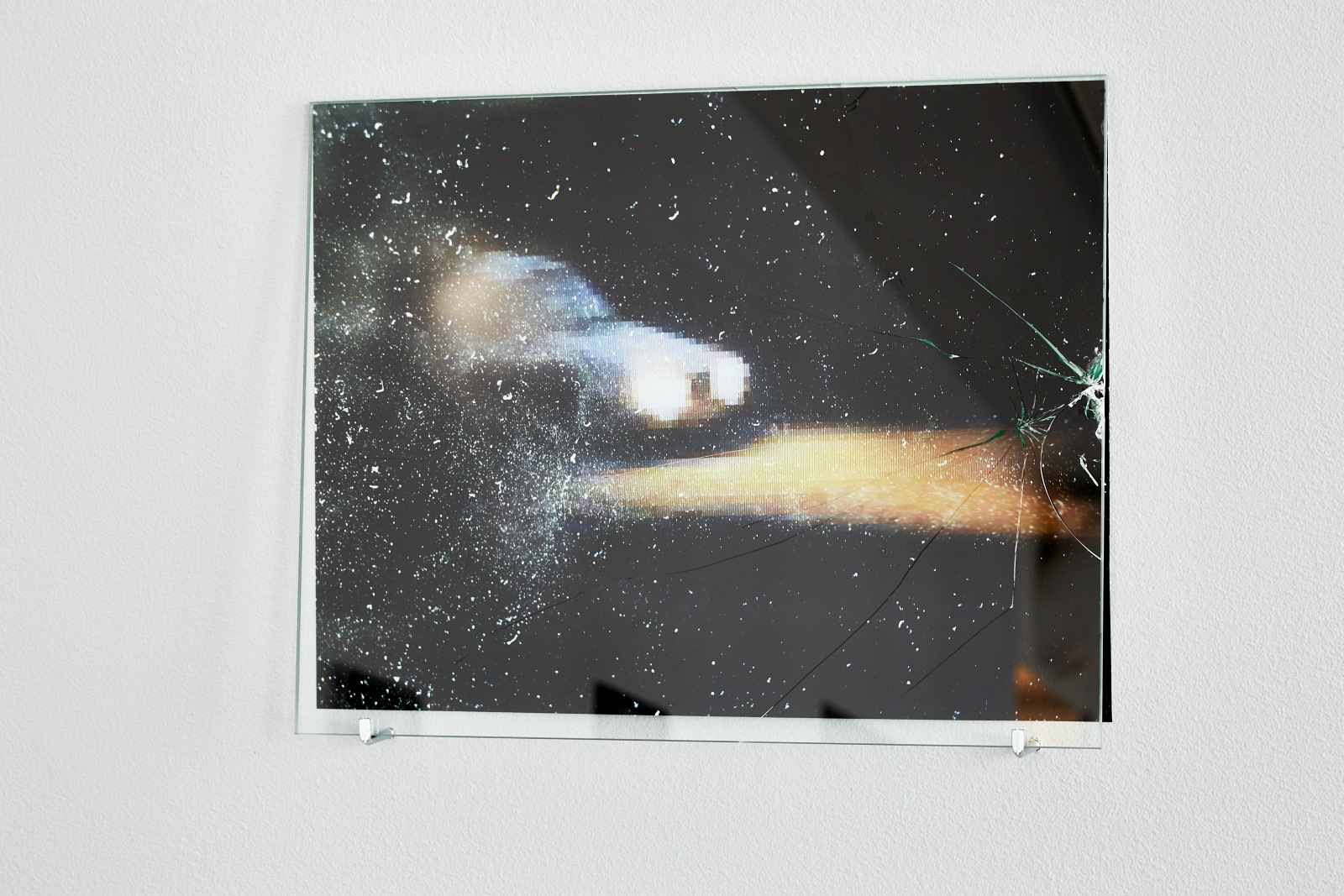
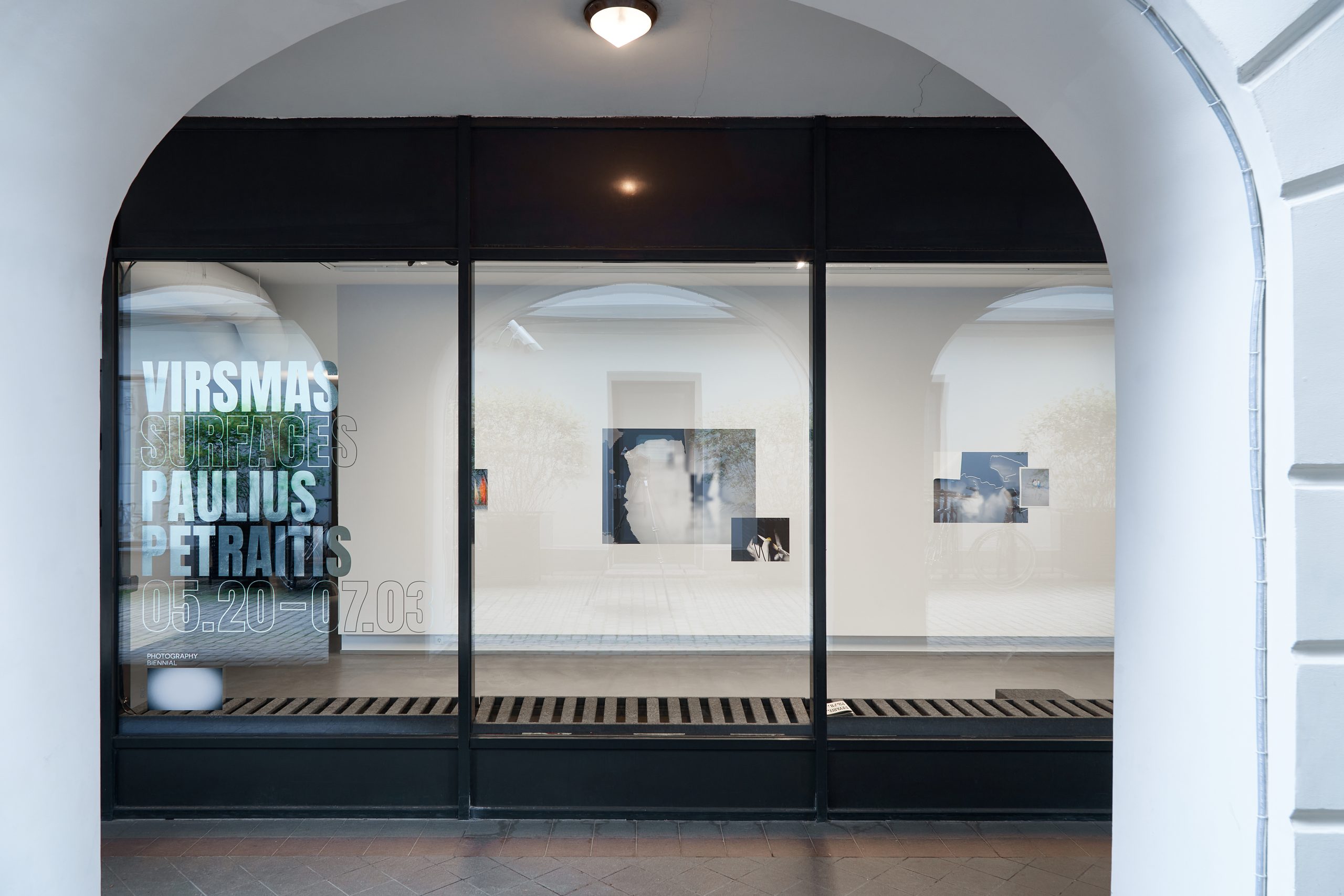
Yet, a photograph cannot exist without a physical carrier. In Surfaces (2021-ongoing), Lithuanian artist-researcher Paulius Petraitis focuses on and examines the exterior side of photographs. Emphasising the materiality of the screen and print, images are here doubly distorted. Taking isolated moments and scenes from films as his source material, Petraitis re-photographs them adding multiple layers of analogue and digital intervention. Something – a hand gesture, a car’s headlights, rubber boots – gets cut out from its habitat of temporal continuity and is frozen into an image that is given new possibilities of meaning. Despite visible distortions, taken all together the images weave an imaginary narrative, one that is suggestive of a cosmic story.
Surfaces was presented in a solo exhibition at ISSP gallery in the framework of Riga Photography Biennial 2022. The installation featured an audio composition created specifically to accompany the series by Gailė Griciūtė & custom frames by Sam Margevicius and Pauls Rietums.
Press: Interview by Ieva Raudsepa | Arterritory
Graphic design: Jūratė Gačionytė
Catalogue essay: Alan Huck
Documentation photos: Madara Gritāne
Vorsprung durch Technik
Group exhibition
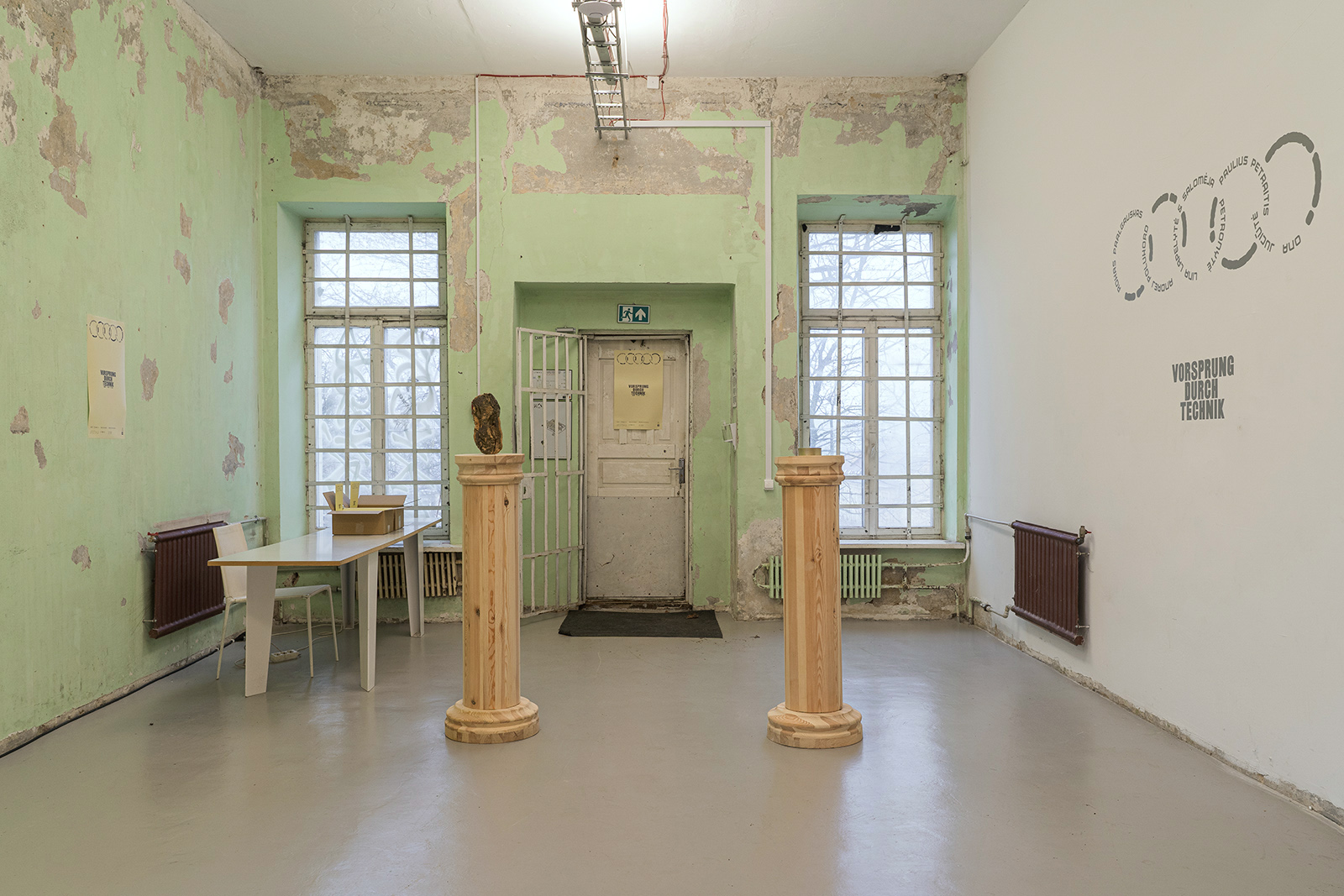
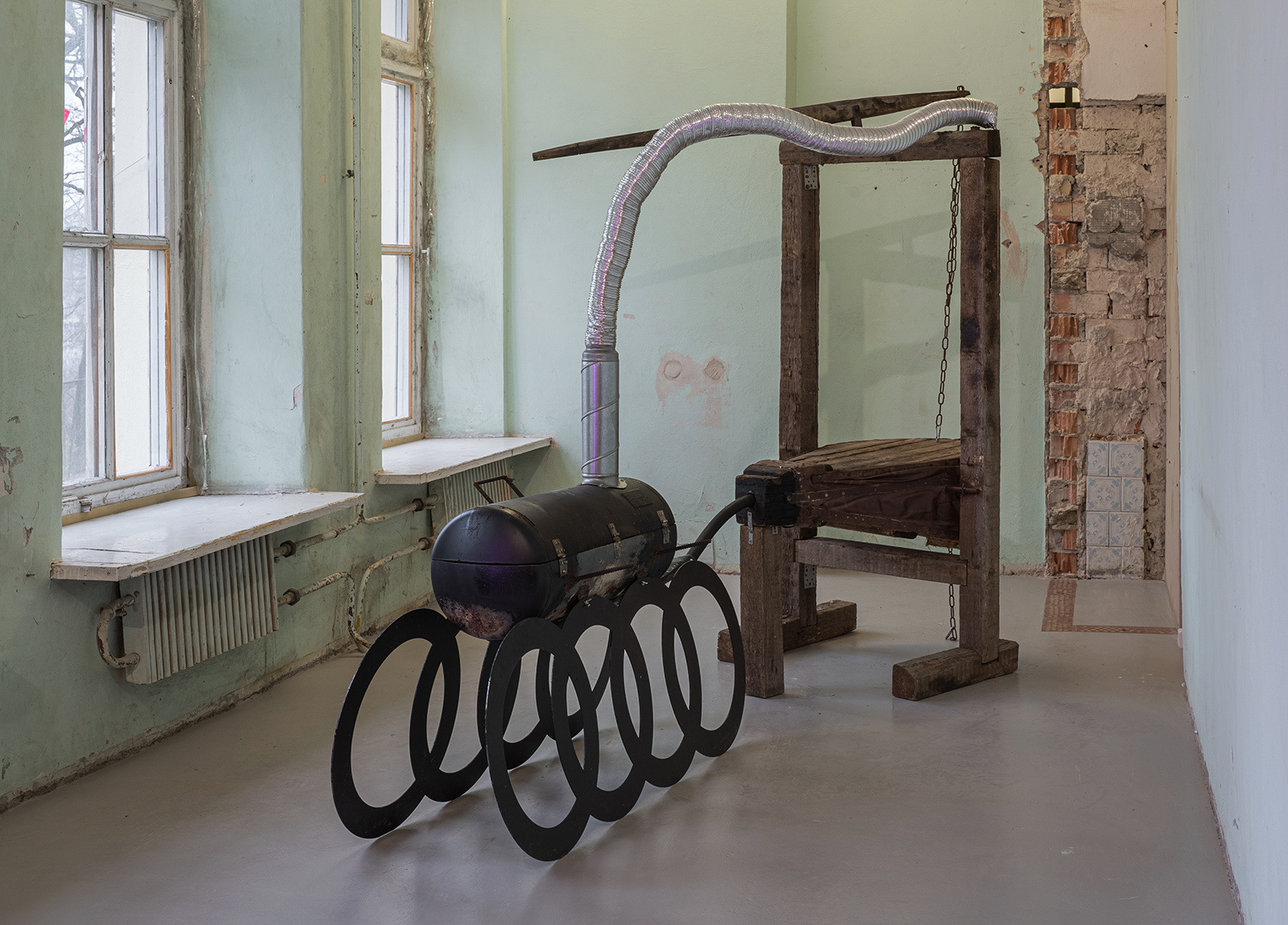
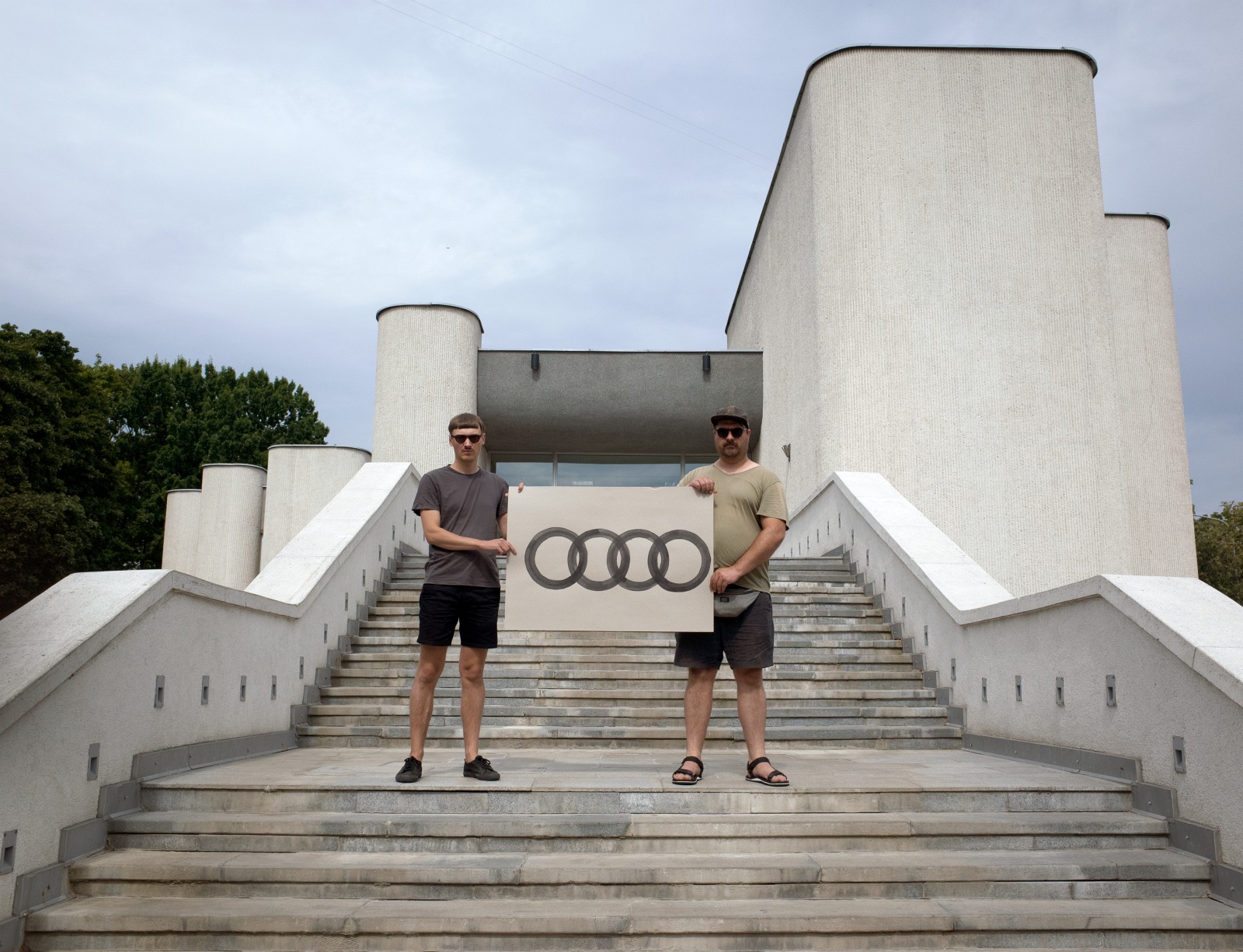
Vorsprung durch Technik was a collaborative group exhibition about the clumsiness of technology. Using the Audi as a cultural prism — in 1990s–2000s Lithuania the Audi had acquired a status as a DIY-folklore icon — the show examined how ordinary technological practices become mythologised and absorbed into shared cultural narratives.
The interdisciplinary interactive installation resulted from a close collaboration by six Lithuanian artists: Ona Juciūtė, Lina Lapelytė & Salomėja Petronytė, Paulius Petraitis, Andrej Polukord, and Rokas Pralgauskas. Newly created works complemented each other in the space, weaving a coherent narrative, in which manifestations of community creativity are examined using Audi as a certain cultural phenomenon. The exhibition also looks at how certain narratives from community become mythologized – they become part of the general cultural consciousness. An important feature of this narrative is interactivity – visitors are invited to participate in the artistic game through works that can be turned on or clicked. Humour and light irony act as a thread connecting the individual elements of this show. In this installation the multifunctional sign of Audi functions as a social prism, which allows to raise questions in the artistic context about the supposed contradictions and multiple overlapping points between the “high” and “low” cultures.
Artists: Ona Juciūtė, Lina Lapelytė & Salomėja Petronytė, Paulius Petraitis, Andrej Polukord, Rokas Pralgauskas
Curators: Rokas Pralgauskas & Paulius Petraitis
Exhibition essay text: Goda Damaševičiūtė
Graphic design: Mindaugas Gavrilovas
Closing performance: Vilnius Academy of Arts Choir (led by Arvydas Adamonis); accompanied by Kęstutis Pavalkis
Gallery “Atletika”, Vilnius
2021 11 04 – 11 28
Full documentation here
Photos: Andrej Vasilenko
Smoke screen
Photography series & publication
Smoke Screen (2014-2015) is a series of personal photographs exploring the condition of digital screenship. It set out from a question – what does it mean to live in a world where the digital screen is so prominent?
The project was published by Lodret Vandret in 2015. Texts by Rowan Lear, design concept by Fred Cave.
It was selected as one of 10 favorite books at 2016 LA Art Book Fair by the Huffington Post. The publication is held in the collections of Metropolitan Museum of Art and MoMA libraries, Design Museum Denmark, Oslo National Academy of the Arts library, and Swarthmore College libraries.
On photographic beings
Group exhibition
On Photographic Beings was a site-specific photography exhibition held at the Latvian National Museum of Art, organized as part of Riga Photography Biennial 2020. It featured newly commissioned works by Evy Jokhova, Tom Lovelace, and Ode de Kort.
On Photographic Beings explores the failure of fully grasping. The exhibition sets out to investigate photographic beings as multidimensional, complex, and often ambiguous. The featured artists specifically look into the various facets of the object-image relationship. This connection, which is traditionally viewed as stemming from an object and resulting in an image, is shown here to be more elaborate and intricate than it at first appears. Photographs are routinely attributed a hold that is exercised over objects. It is as if the camera arrests and grasps – providing a suspended look into objecthood, which is seemingly both insightful and (de)finite. In other words, the camera captures.
The three presented artists challenge this traditional view. British artist Tom Lovelace’s work stimulates a creative dialogue between imagery and objects, and posits itself as an intervention and interruption to the space’s regular existence. Belgian artist Ode de Kort adds to this dialogue by playfully uncovering the complexities of image-based (re)presentation. She explores ways to collaborate with artworks, indicating an object and its creator can be seen as working together. Evy Jokhova, of Russian, Estonian and UK multi-cultural background, uses the concept of mirroring in her consideration of reflection, mimicry and reproduction in photography. Focusing on these processes, she proposes to look at this essential function of photography from an unexpected angle. All artists respond to the specific setting – 4 th floor space of the Latvian National Museum of Art – in their suggestions to problematize the photographic capture.
The works presented in the exhibition can be described as photographic, yet sit outside of the usual boundaries of the medium. They challenge the notion of what a photography exhibition is or may be, opting to discuss the photographic as a shifting concept that is primarily cultural. Through this, On Photographic Beings not only explores the potential of a photographic work to open up the complexity of the object-to-image translation through responding to the specific space, but also investigates some of the very possibilities of photography.
On Photographic Beings
Latvian National Museum of Art, 2020 10 03-11 08
Artists: Evy Jokhova, Ode de Kort, Tom Lovelace
Curator: Paulius Petraitis
Part of Riga Photography Biennial 2020 programme
Press:
Blok magazine | Santa Hirša
Echo gone wrong | Maija Rudovska
Photos: Ansis Starks, Liga Spunde, Kristine Madjare